How Faster Nursing Recruitment Can Improve Patient Care and Workforce Stability

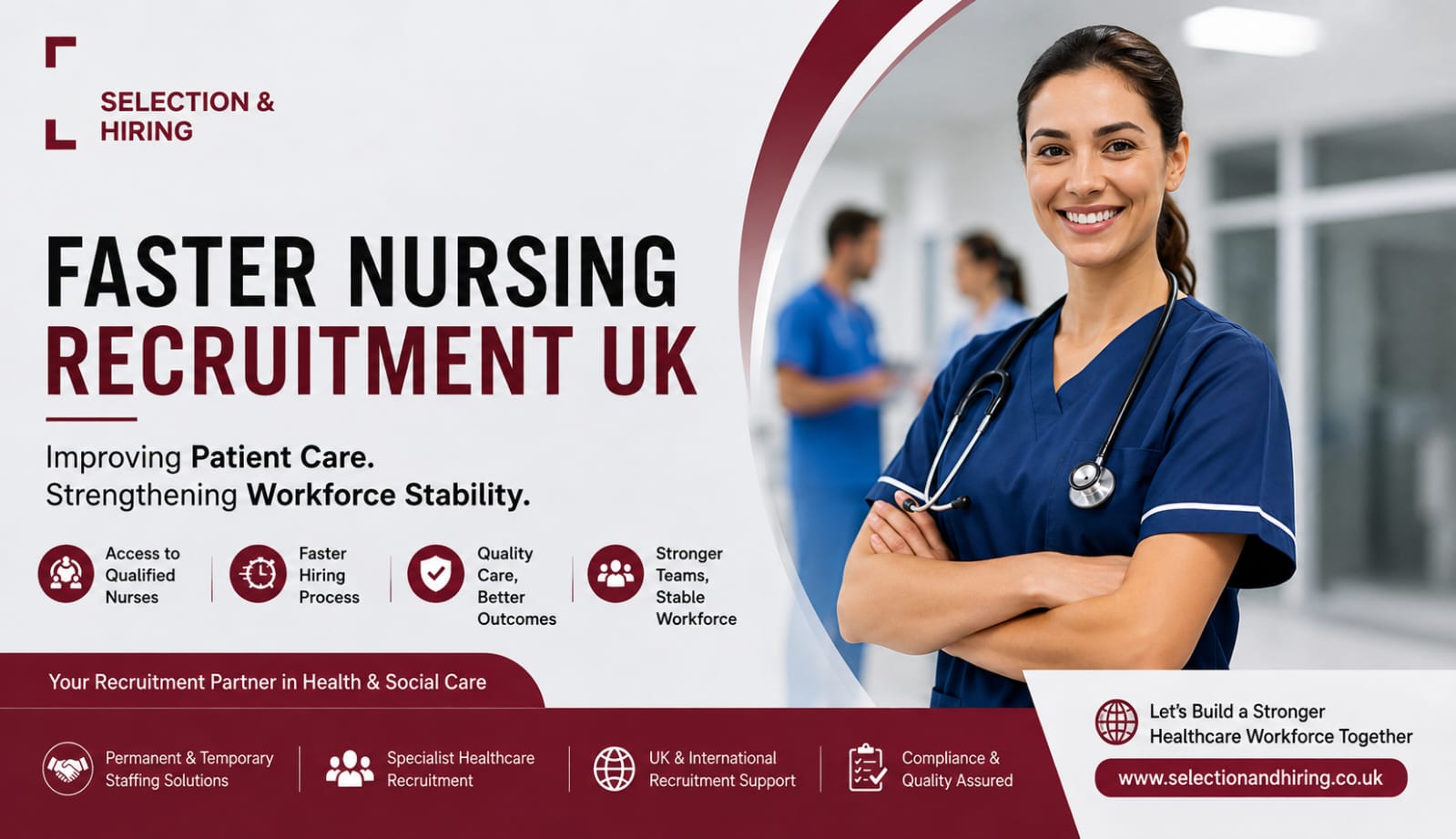

Nursing vacancies are not simply recruitment problems. For healthcare organisations, an unfilled nursing position can affect staffing capacity, employee workload, continuity of care and the overall stability of a healthcare team.
Hospitals, care homes, private healthcare providers and community services all need qualified nurses to maintain effective patient support. When recruitment takes too long, existing employees may have to manage additional responsibilities while employers continue searching for suitable candidates.
This is why faster nursing recruitment in the UK has become an important consideration for healthcare employers. However, faster recruitment should not mean lowering hiring standards. The real objective is to create a recruitment process that is efficient, structured and focused on finding the right nursing professional for the right role.
For organisations looking to improve their recruitment strategy, working with an experienced healthcare recruitment partner such as Selection and Hiring can help simplify candidate sourcing, screening and placement.
Healthcare services depend on having enough qualified professionals available to meet patient needs. When nursing vacancies remain open for extended periods, healthcare organisations may face additional pressure on their existing workforce.
Long recruitment timelines can result from several factors, including:
A more efficient nursing recruitment UK strategy can help employers respond to vacancies sooner while maintaining appropriate recruitment and compliance procedures.
The goal is not simply to hire someone quickly. It is to identify, assess and appoint a suitably qualified professional without unnecessary delays.
Patient care depends on many factors, including clinical leadership, resources, training, communication and staffing. Recruitment is therefore only one part of the wider picture.
Nevertheless, maintaining an appropriately staffed nursing team can help healthcare providers create a more stable environment for patient care.
Patients benefit when healthcare teams are stable and communication between professionals is consistent.
When vacancies are filled efficiently, healthcare providers can strengthen their staffing capacity and reduce the disruption associated with prolonged vacancies.
A stable nursing workforce can support:
Faster recruitment does not automatically guarantee better patient outcomes, but it can help organisations maintain the workforce needed to deliver consistent services.
When a nursing role remains vacant, other members of the team may have to manage additional responsibilities.
Over time, sustained workload pressure can affect employee satisfaction, morale and retention.
Effective nursing staff recruitment can help organisations restore workforce capacity and reduce the pressure associated with persistent vacancies.
This is particularly important for healthcare providers dealing with:
By addressing vacancies efficiently, employers can focus more effectively on maintaining a balanced and sustainable workforce.
Recruitment and retention are closely connected.
Hiring quickly is useful, but hiring the wrong person can create further recruitment challenges. If a new employee leaves shortly after joining, the organisation may have to restart the recruitment process.
This is why successful faster nursing recruitment in the UK should focus on both speed and candidate suitability.
A strong recruitment process considers the following:
The right recruitment approach can help organisations move candidates through the hiring process efficiently while still focusing on quality.
Workforce stability is not achieved simply by reducing the number of vacancies.
Healthcare organisations also need to attract professionals who are likely to remain in their roles and contribute positively to the wider team.
Poor candidate-role matching can contribute to the following:
For this reason, healthcare employers should look beyond the speed of appointment and consider the quality of each recruitment decision.
A specialist recruitment agency can help employers assess candidates against the actual requirements of the position rather than simply forwarding large numbers of applications.
A specialist recruitment agency can support different stages of the hiring process.
Recruiters can use professional networks, candidate databases and targeted recruitment campaigns to identify potential nursing professionals.
Candidates can be assessed against essential qualifications, experience and role requirements before being presented to the employer.
Instead of reviewing a large number of unsuitable applications, employers can receive a more focused selection of relevant candidates.
Efficient communication between candidates and employers can help reduce delays between shortlisting and interviews.
Once an employer selects a candidate, recruitment professionals can help coordinate the next stages of the process.
This can make efficient nurse recruitment more manageable for healthcare organisations that do not have the time or resources to handle every stage internally.
There is an important difference between fast recruitment and rushed recruitment.
Fast recruitment removes unnecessary delays.
Rushed recruitment removes important steps.
Healthcare employers should never sacrifice appropriate candidate assessment simply to fill a vacancy quickly.
A responsible recruitment process should continue to consider:
The best approach is therefore to make the process faster where it can be faster and thorough where it needs to be thorough.
For some UK healthcare employers, international recruitment can form part of a wider strategy for addressing workforce requirements.
International nurse recruitment in the UK provides employers with access to qualified professionals from overseas, subject to the relevant UK requirements and processes.
International recruitment can involve additional steps, such as:
Because of these additional considerations, specialist recruitment support can be particularly valuable when healthcare organisations are building an international talent pipeline.
Selection and Hiring already provides content and recruitment guidance around international nursing recruitment and the wider process for international candidates seeking UK opportunities.
Selection and Hiring focuses on connecting employers with suitable professionals through tailored recruitment solutions.
The company provides recruitment support across healthcare and other sectors, with its existing nursing recruitment resources covering areas including registered nurses, specialist nursing roles, temporary staffing and international recruitment.
For healthcare employers, the value of working with a specialist recruitment partner can include:
Rather than treating every vacancy in exactly the same way, an effective recruitment partner can adapt the approach according to the employer’s staffing requirements.
Healthcare organisations can also improve their internal recruitment process.
A detailed job description helps attract candidates who actually meet the requirements of the position.
Include information about:
Workforce planning can help organisations anticipate future recruitment requirements.
Instead of waiting until a vacancy creates immediate pressure, employers can maintain relationships with potential candidates and recruitment partners.
A database of suitable professionals can reduce sourcing time when new vacancies become available.
Once suitable candidates have been shortlisted, employers should aim to arrange interviews promptly.
Good communication helps candidates understand what happens next and reduces the likelihood of losing strong applicants during a lengthy process.
Working with nursing recruitment agencies in the UK can give healthcare organisations additional access to qualified candidates and recruitment expertise.
Employers can monitor the following:
These metrics can reveal where delays are occurring and where improvements can be made.
Recruitment is not only an employer experience.
Nurses are also evaluating organisations during the hiring process.
If candidates experience unclear communication, repeated delays or a lack of feedback, they may decide to pursue another opportunity.
An efficient recruitment journey can demonstrate professionalism from the beginning.
Candidates generally benefit from:
This can help healthcare organisations compete for qualified nursing professionals in a demanding employment market.
Choosing a recruitment partner is an important workforce decision.
Healthcare employers should consider whether an agency has:
Knowledge of healthcare recruitment can help recruiters understand the difference between general staffing requirements and specialist nursing positions.
The recruitment process should focus on relevant qualifications, experience and suitability.
Recruitment delays can occur when communication between the agency, employer and candidate is slow.
A recruitment partner should understand the organisation’s specific staffing needs rather than simply providing generic candidates.
Different organisations have different workforce requirements. Some may need permanent appointments, while others may require temporary or contract staffing.
For organisations considering overseas candidates, experience with international recruitment can be an additional advantage.
At Selection and Hiring, the focus is on helping employers find suitable professionals while supporting candidates throughout their recruitment journey.
The company describes its recruitment approach as personalised and supports healthcare employers with staffing solutions across permanent, temporary and specialist recruitment requirements.
For healthcare organisations facing nursing vacancies, this approach can help create a more structured path from identifying a workforce requirement to finding suitable candidates.
The objective is not simply to fill vacancies.
It is to help employers build stronger, more reliable and sustainable healthcare teams.
The future of healthcare recruitment will require more than simply advertising vacancies and waiting for applications.
Healthcare organisations need proactive workforce planning, efficient candidate sourcing, effective screening and strong communication.
When these elements work together, recruitment can become faster without becoming less thorough.
The benefits can extend beyond the recruitment department.
A more efficient hiring process can help healthcare organisations:
This is why faster nursing recruitment in the UK should be viewed as part of a broader workforce strategy rather than simply a way to reduce hiring time.
Nursing recruitment has a direct connection to workforce capacity and can influence how effectively healthcare organisations respond to staffing challenges.
However, speed alone is not the answer. The strongest recruitment strategy combines speed, quality, compliance, candidate experience and long-term suitability.
For healthcare providers, reducing unnecessary recruitment delays can make it easier to respond to nursing vacancies, support existing teams and build a more stable workforce.
With specialist recruitment support from Selection and Hiring, employers can access tailored healthcare recruitment solutions designed around their staffing requirements.
Whether the need is for permanent nursing professionals, temporary staff, specialist candidates or international nurses, a structured recruitment process can help organisations move from vacancy to placement more efficiently.
The goal is simple: recruit efficiently, hire responsibly and build healthcare teams that are prepared to deliver consistent, high-quality care.
‘Faster nursing recruitment UK’ refers to improving the hiring process so healthcare employers can identify, screen, interview and appoint suitable nursing professionals more efficiently while maintaining appropriate recruitment standards.
It can help reduce vacancy periods, restore staffing capacity reduce pressure on existing employees and improve workforce planning.
Efficient recruitment can help healthcare organisations maintain appropriate staffing capacity and support continuity of care. However, patient outcomes depend on many factors beyond recruitment alone.
Recruitment agencies can assist with candidate sourcing, screening, shortlisting, interview coordination and placement, helping employers reduce avoidable delays.
No. Effective recruitment should remove unnecessary delays while maintaining appropriate qualification, experience and compliance checks.
Yes. Selection and Hiring provides healthcare recruitment solutions and supports employers seeking nursing and other healthcare professionals across the UK.
Selection and Hiring provides recruitment guidance and support relating to international nursing recruitment in the UK, including opportunities and processes for overseas nursing professionals.
If your organisation is facing nursing vacancies or wants to improve its healthcare recruitment process, Selection and Hiring can help you identify a recruitment approach suited to your workforce requirements.
Find the right professionals. Strengthen your team. Recruit with confidence.
Selection and Hiring — Connecting the right people with the right opportunities.