Healthcare Recruitment Compliance: What UK Employers Need to Know

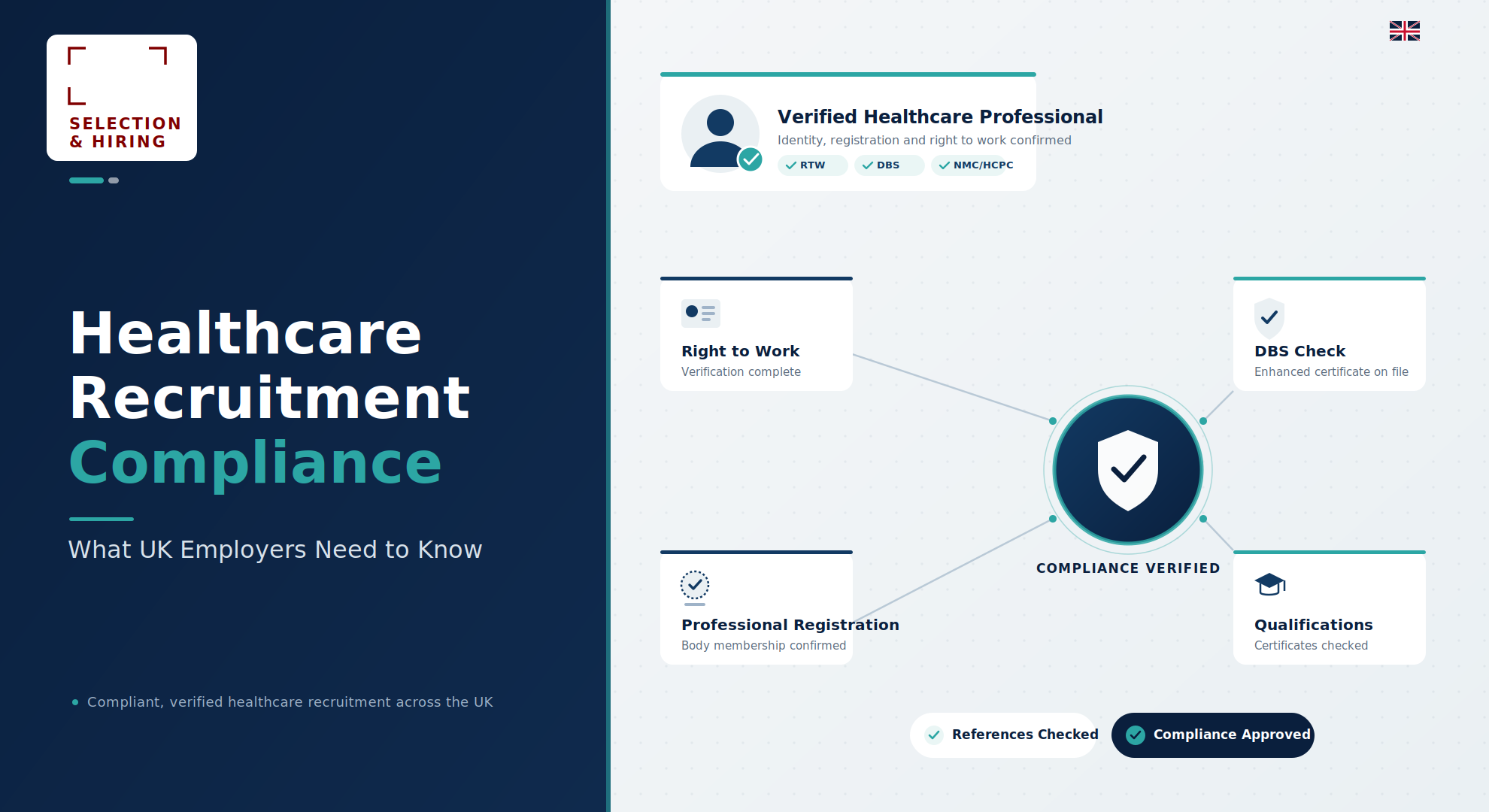

Recruiting healthcare professionals requires more than finding candidates with the right experience. UK healthcare employers must also ensure that candidates meet the appropriate professional, legal, safeguarding and employment requirements before they begin work. This is where healthcare recruitment compliance becomes an essential part of the hiring process.
From right-to-work verification and DBS checks to professional registration, qualification checks, employment references and health assessments, healthcare employers need a structured approach to pre-employment screening.
For organisations hiring nurses, doctors, healthcare assistants, allied health professionals and other healthcare staff, working with an experienced recruitment partner can make the process more efficient while helping employers maintain appropriate standards.
Selection and Hiring supports healthcare employers and candidates with recruitment solutions across the UK, including permanent, temporary and contract healthcare staffing. Its existing healthcare recruitment services cover NHS, private healthcare, nursing, care and allied health recruitment.
Healthcare recruitment compliance refers to the checks and procedures employers use to make sure candidates are legally and professionally suitable for a healthcare position.
Healthcare hiring is particularly sensitive because employees may work directly with patients, vulnerable adults, children or people who require specialist care.
A compliant recruitment process can help employers verify the following:
The exact checks required can vary depending on the position, employer and circumstances of the candidate.
For NHS organisations, NHS Employers identifies six core employment check standards covering identity, criminal record checks, professional registration and qualifications, right to work, employment history and references, and work health assessments.
Healthcare organisations cannot afford to treat recruitment checks as a simple administrative exercise.
The people being recruited may have responsibilities that directly affect patient care and safety. Employers therefore need confidence that candidates have the qualifications, registration, experience and legal status required for their positions.
Effective healthcare hiring compliance can help organisations:
For employers experiencing staffing shortages, the challenge is balancing speed with thoroughness. A recruitment partner such as Selection and Hiring can help employers manage candidate sourcing and recruitment while keeping compliance considerations central to the process.
NHS recruitment involves several important pre-employment checks.
Employers need to establish that the candidate is genuinely the person identified in their application.
Identity verification provides the foundation for subsequent checks. If identity information is incorrect or incomplete, other verification processes can also be affected.
A consistent identity-checking process should therefore be established before progressing a candidate to appointment.
Employers must establish that a candidate has the legal right to work in the UK before employment begins.
This is particularly important when recruiting internationally.
The appropriate process can depend on the candidate’s immigration status and documentation. Employers should always follow current Home Office requirements rather than relying on outdated recruitment procedures.
For healthcare employers using recruitment agencies, it is also important to understand how right-to-work checks have been completed and what evidence is available.
Many healthcare roles require professional registration.
Employers should verify the candidate’s current registration with the relevant professional regulator before appointment.
This is particularly important for regulated roles such as nursing and other registered healthcare professions.
A CV stating that someone is registered should not replace an appropriate verification process.
Healthcare professionals may need specific academic, clinical or professional qualifications to undertake their roles.
Employers should verify qualifications relevant to the position and consider whether additional evidence is required, particularly where candidates have trained outside the UK.
For international candidates, employers may need to consider additional professional registration or qualification requirements before the individual can undertake regulated work.
Depending on the role, employers may need to complete an appropriate Disclosure and Barring Service check.
The level of DBS check required depends on the position and its eligibility.
Healthcare employers should avoid applying a one-size-fits-all approach. Instead, they should establish what level of check is appropriate for the duties involved.
Where a role involves vulnerable people, safeguarding considerations become especially important.
Previous employment can provide useful evidence about a candidate’s experience and suitability.
Employers should review employment history and obtain appropriate references as part of the recruitment process.
This can be particularly important for healthcare positions where previous clinical experience, responsibilities and training may directly relate to the new role.
Gaps in employment history should also be appropriately considered rather than overlooked.
Some healthcare roles may require workplace health or occupational health assessments.
The purpose is to consider whether the candidate can undertake the requirements of the specific position and whether appropriate workplace adjustments may be necessary.
Employers should approach health assessments carefully and consistently, taking account of relevant employment and equality requirements.
A strong recruitment process should integrate compliance into every stage rather than leaving checks until the candidate is ready to start.
A practical process can look like this:
Role Assessment → Candidate Sourcing → Initial Screening → Identity Verification → Right to Work → Qualifications & Registration → DBS Check → Employment History & References → Health Assessment → Final Review → Appointment
Not every candidate will require exactly the same checks.
The recruitment process should be adapted to the role, candidate and employer requirements.
Healthcare recruitment agencies can provide valuable support, particularly when employers need to recruit quickly.
However, employers should still understand how candidates have been screened.
Before partnering with an agency, healthcare employers should ask:
Clear communication between the employer and recruitment agency can reduce misunderstandings and improve the overall recruitment process.
At Selection and Hiring, the focus is on connecting healthcare employers with suitable professionals while providing a structured recruitment experience.
The organisation supports healthcare recruitment across areas including nursing, medical, care and allied health staffing, with permanent, temporary and contract recruitment solutions.
For employers, this can mean support with:
Selection and hiring help employers access candidates for a range of healthcare positions rather than relying exclusively on traditional job advertising.
Candidates can be assessed against the requirements of the vacancy before being presented to employers.
Understanding the healthcare recruitment environment helps recruiters consider the specific requirements associated with clinical and care positions.
Healthcare organisations may require permanent employees, temporary workers or contract professionals depending on their workforce needs.
Selection and Hiring provides recruitment solutions designed around different hiring requirements.
Successful recruitment is not simply about filling a vacancy quickly. The objective is to identify professionals whose experience and skills align with the requirements of the role and organisation.
Healthcare employers often face a difficult combination of workforce shortages, urgent vacancies and strict recruitment requirements.
Selection and Hiring aims to make the hiring process more straightforward by connecting employers with healthcare professionals across different areas of the sector.
Whether an organisation needs permanent nursing staff, temporary healthcare workers, specialist professionals or support with wider healthcare recruitment, a structured recruitment partnership can help reduce the pressure on internal hiring teams.
The emphasis should remain on finding the right professional for the right role while ensuring appropriate recruitment and compliance processes are followed.
International recruitment can provide access to a wider talent pool, but it can also introduce additional considerations.
Employers may need to consider the following:
Requirements can change, so employers should always check the latest official guidance before making recruitment decisions.
For organisations recruiting internationally, working with an experienced healthcare recruitment partner can provide additional structure around the candidate journey.
Waiting until the final stage of recruitment to start checking documentation can create unnecessary delays.
Different roles can have different legal, professional and safeguarding requirements.
A CV provides information supplied by the candidate. It should not automatically be treated as verification.
For regulated healthcare roles, current registration can be fundamental to eligibility.
Immigration and right-to-work processes can change, so employers should work from current official guidance.
Employers should maintain appropriate evidence of completed checks and recruitment decisions.
Recruitment agencies can support employers, but organisations should understand and appropriately oversee the recruitment and compliance arrangements being used.
Before appointing a healthcare professional, employers should consider whether they have:
The exact requirements should always be determined according to the role and current UK requirements.
Healthcare recruitment requires a balance between efficiency and responsibility. Employers need access to candidates, but they also need confidence that recruitment processes are structured and appropriate.
Selection and Hiring brings together healthcare recruitment expertise, candidate sourcing and tailored staffing support to help UK organisations manage their workforce requirements. From nursing and care recruitment to broader healthcare staffing, the goal is to make the recruitment journey more efficient while keeping the needs of employers and candidates at the centre.
Healthcare recruitment compliance is an essential part of responsible hiring in the UK healthcare sector. Employers need to consider identity, right to work, professional registration, qualifications, DBS requirements, employment history, references and health assessments according to the specific role.
For NHS employers in particular, understanding the relevant NHS employment check standards provides an important foundation for a structured recruitment process. However, compliance should not prevent organisations from recruiting efficiently. With the right recruitment strategy and a knowledgeable recruitment partner, employers can access healthcare talent while maintaining a more organised approach to screening and pre-employment checks.
Selection and Hiring helps UK employers connect with healthcare professionals across permanent, temporary and contract opportunities, providing tailored recruitment support for organisations seeking dependable healthcare talent. If your organisation is looking to strengthen its healthcare workforce, Selection and Hiring can help you identify suitable recruitment solutions for your hiring requirements.
Healthcare recruitment compliance is the process of ensuring that healthcare candidates meet the relevant legal, professional, safeguarding and employment requirements before starting a role.
NHS recruitment checks include key pre-employment checks covering areas such as identity, criminal records, professional registration and qualifications, right to work, employment history and references, and work health.
No. DBS requirements depend on the role and whether it is eligible for a particular level of criminal record check.
Professional registration helps employers confirm that candidates meet the registration requirements applicable to regulated healthcare professions.
Yes. Selection and Hiring provides healthcare recruitment support for employers looking for permanent, temporary and contract professionals across areas including nursing, care, medical and allied health recruitment.
A specialist agency can help employers access a wider candidate pool streamline sourcing and screening, and provide recruitment expertise relevant to healthcare roles.
Employers should establish a consistent, role-specific recruitment process, keep appropriate records, verify candidate information and regularly review their procedures against current UK requirements.