How to Reduce Nurse Recruitment Time in Sheffield: Proven Strategies for Healthcare Employers in 2026

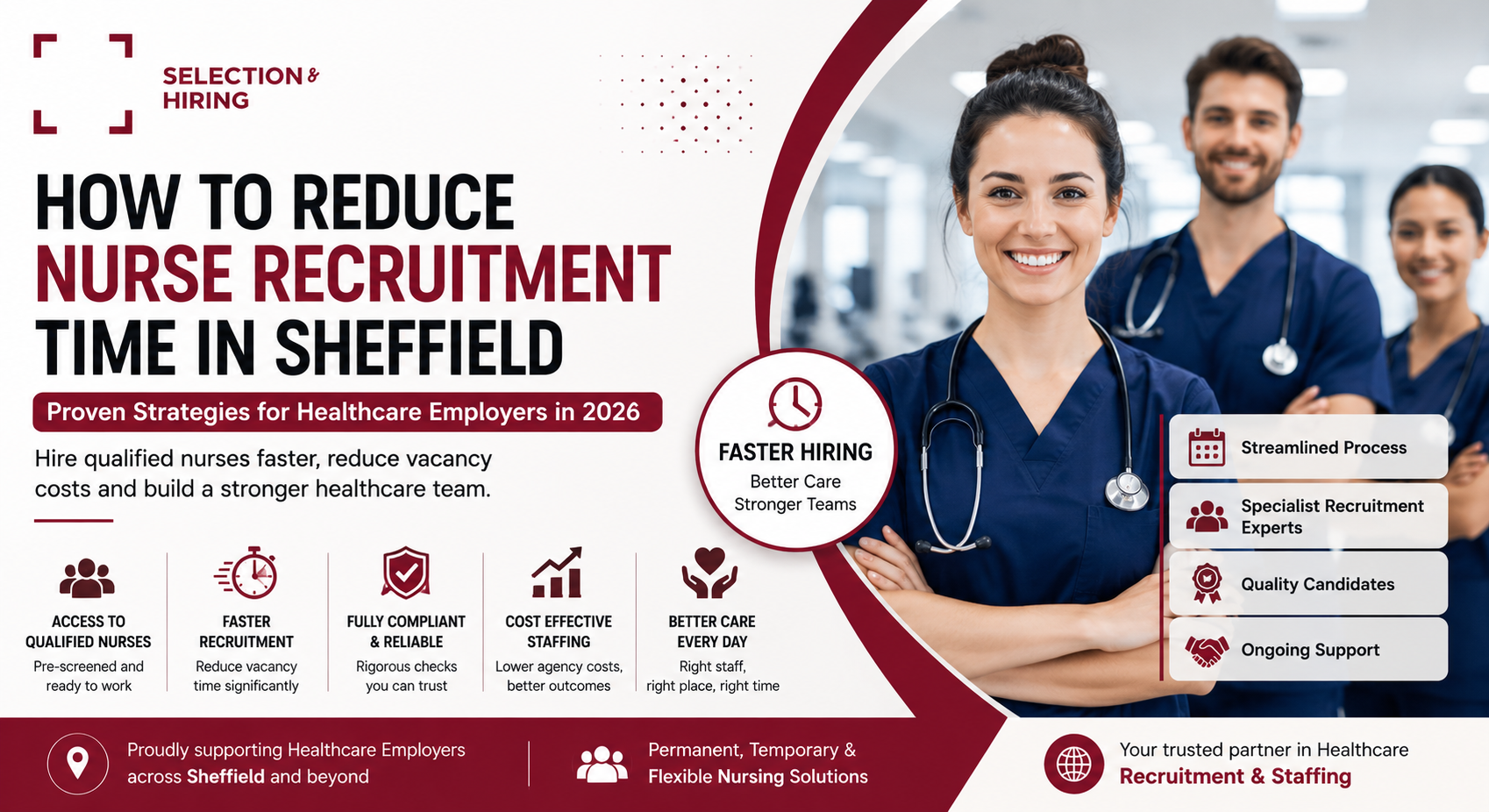

Recruiting qualified nurses has become one of the biggest workforce challenges facing healthcare providers across Sheffield. Whether you manage an NHS trust, private hospital, GP practice, nursing home, rehabilitation centre, or specialist healthcare service, filling nursing vacancies quickly while maintaining high recruitment standards is becoming increasingly difficult.
A vacant nursing position doesn’t simply leave a gap on the rota; it affects patient care, places additional pressure on existing staff, increases overtime costs, and can impact employee morale. In many cases, the longer a vacancy remains open, the greater the operational and financial impact on the organization.
Today’s recruitment market is highly competitive. Experienced nurses often receive multiple job offers, and employers who take too long to review applications, arrange interviews, or issue offers frequently lose strong candidates to competitors.
Reducing recruitment time isn’t about rushing decisions. It’s about creating an efficient hiring process that enables healthcare organizations to identify, assess, and appoint the right professionals without unnecessary delays.
This guide explains why recruitment often takes longer than expected, highlights the most common bottlenecks, and shares practical strategies that can help healthcare employers recruit qualified nurses more efficiently. You’ll also discover how Selection and Hiring supports organizations across Sheffield with faster, compliant, and tailored healthcare recruitment solutions.
Many healthcare employers assume the shortage of nurses is the only reason vacancies remain open. While workforce shortages certainly play a role, lengthy recruitment processes are often caused by internal inefficiencies that can be improved.
Common recruitment delays include:
Even small delays at each stage of the hiring process can add several weeks before a successful candidate receives an offer.
Leaving nursing vacancies unfilled affects far more than staffing numbers. The consequences are felt across the entire organization.
Healthcare employers commonly experience the following:
Reducing recruitment time helps healthcare organizations minimize these challenges while improving workforce stability and patient outcomes.
Many healthcare job advertisements focus almost entirely on responsibilities and qualifications, giving candidates little insight into why they should choose one employer over another.
An effective nursing job advertisement should clearly explain:
Clear, engaging job descriptions attract more relevant applicants and reduce time spent screening unsuitable candidates.
One of the biggest reasons employers lose talented nurses is slow communication.
Top candidates rarely remain available for long. Organizations that wait a week or more before arranging interviews often discover their preferred applicants have already accepted another role.
Aim to:
A faster recruitment journey creates a better candidate experience and improves offer acceptance rates.
Recruitment shouldn’t begin only when a vacancy appears.
Healthcare employers who maintain relationships with previous applicants, referrals, and passive candidates can significantly reduce hiring times.
Building a talent pipeline allows organizations to contact suitable professionals immediately when positions become available, reducing reliance on emergency recruitment campaigns.
Today’s nurses research potential employers before submitting applications.
They want to understand:
A strong employer brand encourages more applications from qualified professionals while improving recruitment efficiency.
Modern recruitment technology can dramatically shorten hiring timelines.
Healthcare providers increasingly benefit from the following:
These tools reduce administrative workload while creating a smoother experience for both employers and candidates.
Background checks, professional registrations, references, and compliance documentation are essential within healthcare recruitment.
However, completing these tasks sequentially often causes unnecessary delays.
Many organizations now complete compliance activities in parallel with interviews, allowing recruitment to progress more efficiently without compromising patient safety or regulatory standards.
Partnering with a healthcare recruitment specialist is one of the most effective ways to reduce recruitment time.
Unlike general recruitment agencies, specialist recruiters understand healthcare workforce planning, nursing qualifications, compliance requirements, and the urgency of filling clinical vacancies.
At Selection and Hiring, we maintain an extensive network of pre-screened nursing professionals, enabling healthcare employers across Sheffield to access qualified candidates more quickly.
Rather than simply filling vacancies, we work alongside organizations to develop tailored recruitment strategies that improve hiring efficiency while maintaining the highest recruitment standards.
| Recruitment Challenge | Better Approach |
|---|---|
| Waiting until vacancies become urgent | Plan recruitment proactively |
| Lengthy interview processes | Streamline decision-making |
| Poor communication with candidates | Provide regular updates |
| Generic job adverts | Highlight benefits and culture |
| Recruiting only when vacancies arise | Build a continuous talent pipeline |
| Choosing speed over quality | Balance efficiency with thorough screening |
Healthcare recruitment requires more than simply matching CVs to vacancies.
At Selection and Hiring, we understand the challenges healthcare providers face when recruiting skilled nursing professionals in today’s competitive market.
Our recruitment specialists support hospitals, GP practices, care homes, rehabilitation centres, and private healthcare organizations with:
By combining industry expertise with an efficient recruitment process, we help employers reduce hiring times while maintaining high standards of candidate quality and compliance.
Recruitment timelines vary depending on the role, compliance requirements, and candidate availability. Organizations with streamlined processes and specialist recruitment support often fill vacancies much faster than those relying solely on traditional recruitment methods.
High demand, workforce shortages, increased competition, lengthy recruitment processes, and evolving candidate expectations all contribute to recruitment challenges.
Yes. Specialist healthcare recruitment agencies provide access to qualified candidates, reduce administrative workload, and help employers recruit more efficiently while maintaining compliance.
Temporary nurses provide valuable support during periods of increased demand, annual leave, maternity cover, or unexpected staff shortages while permanent recruitment is underway.
Reducing nurse recruitment time in Sheffield isn’t about compromising recruitment quality; it’s about removing unnecessary delays, improving communication, and adopting a more strategic approach to workforce planning. Healthcare employers that invest in efficient recruitment processes are better positioned to attract skilled nurses, reduce staffing pressures, and maintain consistently high standards of patient care.
For organizations looking to strengthen their workforce, partnering with an experienced healthcare recruitment specialist can make a significant difference. Selection and Hiring works closely with healthcare providers across Sheffield to deliver tailored recruitment solutions that help employers hire qualified nurses faster, build resilient teams, and support long-term workforce success.
Selection & Hiring helps employers hire qualified professionals and supports candidates in finding the right opportunities through expert recruitment and staffing solutions across the UK.